

Travel Tips
Lorem ipsum dolor sit amet, consectetur adipiscing elit.
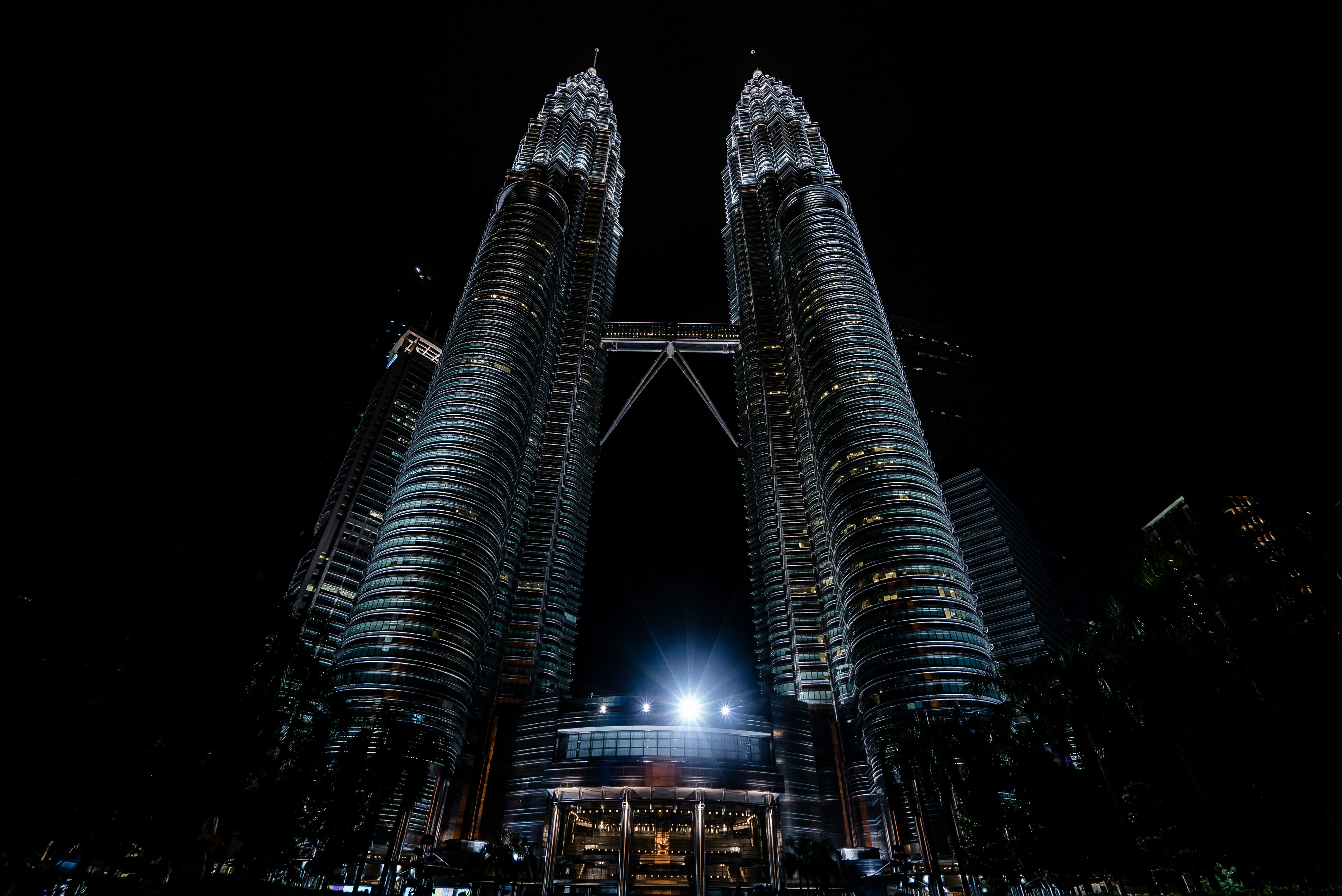
The Petronas Twin Towers, standing majestically in the heart of Kuala Lumpur, Malaysia, represent one of the most remarkable architectural achievements of the 20th century. Completed in 1998, these twin skyscrapers held the title of the world's tallest buildings until 2004, reaching an impressive height of 451.9 meters (1,483 feet). More than just architectural marvels, the towers symbolize Malaysia's rapid economic development and its emergence as a modern, forward-thinking nation on the global stage.
The journey of the Petronas Twin Towers began in the early 1990s when Malaysia's national oil company, Petronas, envisioned creating a landmark that would reflect the country's growing prosperity and ambition. The project was initiated under the leadership of Prime Minister Dr. Mahathir Mohamad, who saw the towers as a symbol of Malaysia's Vision 2020—a plan to transform the country into a fully developed nation by the year 2020.
The construction process was a testament to international collaboration and engineering excellence. An international design competition was held, attracting submissions from renowned architectural firms worldwide. The winning design came from César Pelli, an Argentine-American architect whose vision combined postmodern architectural principles with Islamic geometric patterns, creating a structure that honored Malaysia's cultural heritage while embracing modernity.
The building process itself was extraordinary. Two different construction companies—Hazama Corporation from Japan for Tower 1 and Samsung C&T from South Korea for Tower 2—worked simultaneously, creating a friendly but intense competition to see which team could complete their tower first. This unique approach not only accelerated the construction timeline but also demonstrated Malaysia's commitment to excellence and innovation.
The Petronas Twin Towers hold profound significance for Malaysia and its people. They represent the nation's transformation from a developing country to a modern, industrialized economy. The towers stand as a physical manifestation of Malaysia's economic success, particularly in the oil and gas industry, which has been a cornerstone of the nation's development.
Beyond their economic symbolism, the towers reflect Malaysia's multicultural identity. The Islamic geometric patterns incorporated into the design pay homage to the country's predominant religion while the postmodern architectural style represents its embrace of global modernity. This fusion of traditional Islamic aesthetics with contemporary design principles perfectly captures Malaysia's unique position as a bridge between East and West, tradition and innovation.
The towers have also become a source of national pride, appearing on currency, stamps, and countless promotional materials. They serve as a beacon for tourism, attracting millions of visitors annually who come to marvel at their architectural beauty and enjoy the panoramic views from the skybridge and observation deck. For Malaysians, the towers are not just buildings—they are a symbol of what the nation has achieved and what it aspires to become.
Today, the Petronas Twin Towers continue to inspire architects, engineers, and dreamers worldwide. They stand as a testament to human ingenuity, international cooperation, and the power of visionary leadership. As Malaysia continues to evolve, these iconic structures remain a constant reminder of the nation's journey and its place in the global community.