
Challenges of Kuala Lumpur's Soft Ground
The construction of the Petronas Twin Towers' foundations presented one of the most challenging engineering problems ever faced in high-rise construction. Kuala Lumpur sits on soft, compressible soil conditions that are typical of many Southeast Asian cities. This soft ground, composed primarily of clay and silt, presented significant challenges for supporting structures of such unprecedented height and weight.
The soft ground conditions meant that conventional foundation systems would be inadequate for the towers. The soil's low bearing capacity and high compressibility required a foundation system that could transfer the tremendous loads from the towers deep into more stable soil layers far below the surface. This necessitated the design and construction of the deepest foundations ever built at that time, reaching depths of over 100 meters below ground level.
The engineering team, led by Thornton Tomasetti Engineers, conducted extensive geotechnical investigations to understand the soil conditions and develop appropriate foundation solutions. These investigations involved drilling numerous boreholes, conducting soil tests, and analyzing the ground's behavior under various loading conditions. The data gathered from these investigations was essential to designing a foundation system that would safely support the towers for decades to come.
Foundation Design and Engineering
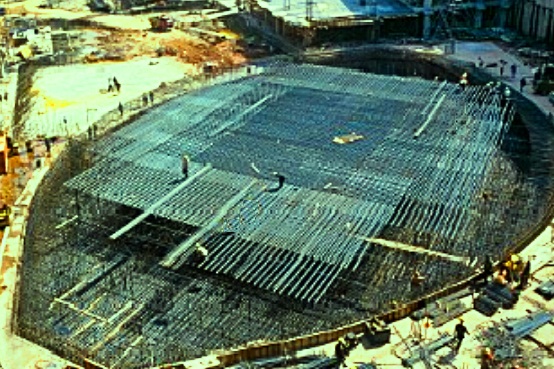
The foundation system designed for the Petronas Twin Towers consisted of massive reinforced concrete foundations that extended deep into the ground. The foundations were designed to transfer the tremendous loads from the towers—weighing hundreds of thousands of tons—safely into the underlying soil and rock. This required careful engineering to ensure that the foundations would not settle excessively or fail under the applied loads.
The foundation design incorporated multiple elements, including large concrete rafts that distributed the loads over a wide area and deep foundation elements that transferred loads to more stable soil layers. The design also had to account for the towers' movement in the wind, ensuring that the foundations could accommodate the dynamic loads imposed by the building's response to wind forces.
The engineering of the foundations required extensive computer modeling and analysis to predict how the foundations would perform under various loading conditions. The engineers had to consider not just the static loads from the building's weight but also dynamic loads from wind, seismic activity, and other forces. This comprehensive analysis was essential to ensuring the foundations' safety and performance.
Excavation and Construction Process
The foundation construction began with extensive excavation work, removing massive amounts of soil and rock to create the space needed for the foundations. This excavation work was complex and time-consuming, requiring careful planning to ensure the stability of the excavation walls and the safety of the workers. The excavation had to be conducted in stages, with support systems installed as the excavation progressed deeper into the ground.
Once the excavation reached the required depth, the construction of the reinforced concrete foundations began. This involved placing massive amounts of concrete, with individual foundation elements requiring thousands of cubic meters of concrete. The concrete placement had to be carefully coordinated to ensure that the concrete was properly placed and cured, as any defects could compromise the foundation's performance.
The foundation construction required around-the-clock work, with construction teams working in shifts to maintain progress. The work was physically demanding and required careful attention to detail, as the quality of the foundation work would determine the success of the entire project. The construction teams used advanced concrete placement techniques and extensive quality control measures to ensure that the foundations met all design requirements.
Concrete Suppliers and Technology
The foundation construction required enormous quantities of high-quality concrete, necessitating the establishment of on-site concrete batching plants and the coordination of multiple concrete suppliers. The concrete used in the foundations had to meet strict specifications for strength, durability, and workability, requiring careful selection of materials and precise mixing procedures.
The concrete suppliers worked closely with the construction teams to ensure that concrete was delivered when needed and that it met all quality requirements. This required sophisticated logistics and quality control systems to coordinate the delivery of thousands of cubic meters of concrete over the course of the foundation construction period.
Advanced concrete technology was employed to ensure that the concrete would perform as required. This included the use of specialized admixtures to improve workability and strength, careful control of the water-cement ratio, and extensive testing to verify that the concrete met all specifications. The quality of the concrete was essential to the foundations' performance, and the construction teams' attention to this aspect of the work helped ensure the project's success.
Quality Control and Testing
Throughout the foundation construction, extensive quality control measures were implemented to ensure that the foundations met all design requirements. This included regular testing of concrete samples, inspection of reinforcement placement, and verification that the construction matched the design documents. The quality control program was comprehensive, covering all aspects of the foundation construction from material selection through final completion.
Testing of the foundations included load tests to verify that they could support the required loads, settlement monitoring to ensure that the foundations were performing as expected, and structural integrity tests to confirm that the foundations were properly constructed. These tests provided confidence that the foundations would perform safely and effectively throughout the towers' service life.
The completion of the foundation work marked a major milestone in the project, as it established the base upon which the entire structure would be built. The quality of the foundation work was essential to the success of the entire project, and the construction teams' attention to detail during this phase helped ensure that the towers would be built on a solid and reliable foundation that would support them for generations to come.